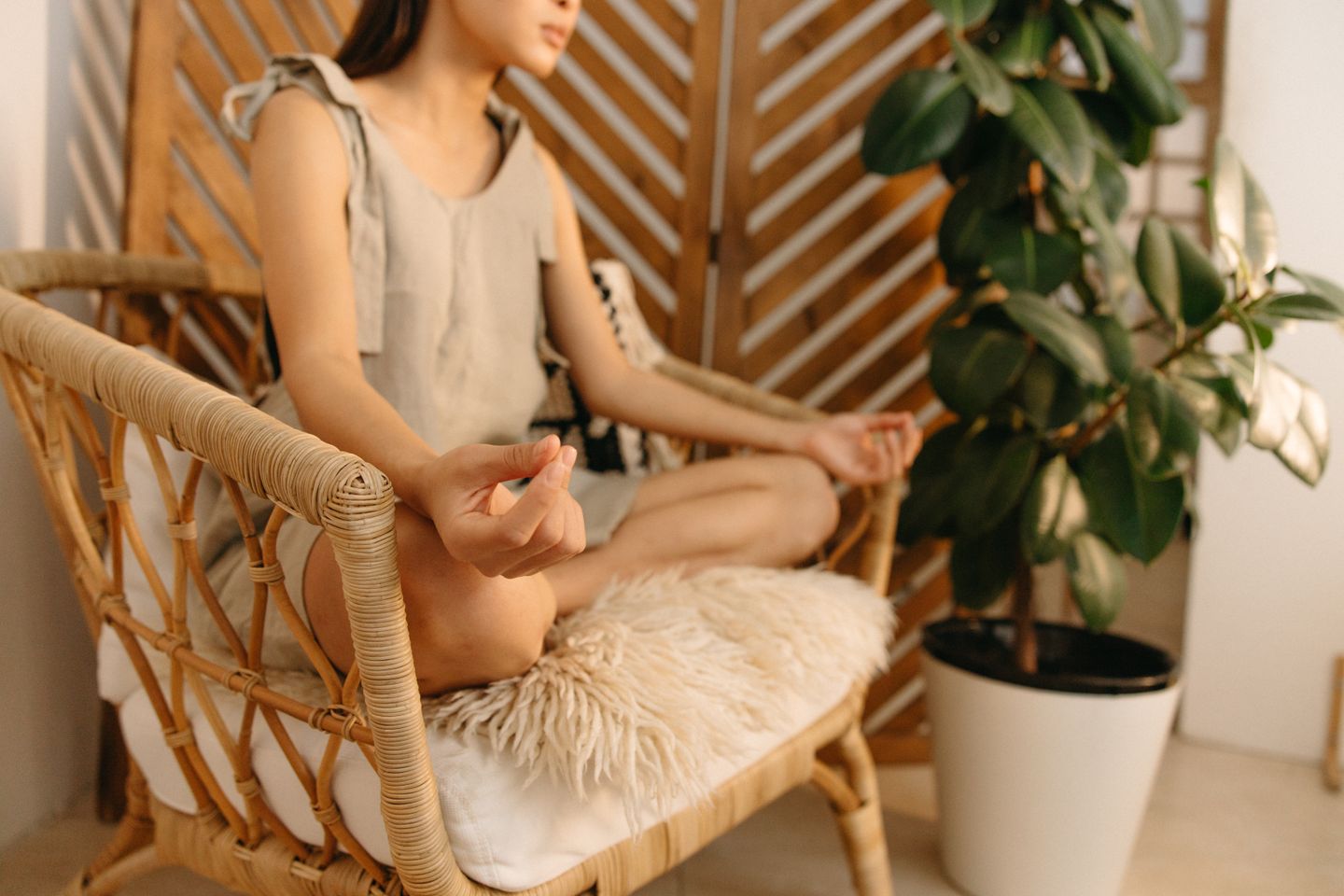
Make the place usable
Choose a position and place that feel comfortable for an ordinary pause. You might sit in a familiar chair, put down a notebook, or leave a short interval after an appropriately guided yoga session. Keep walking routes clear and useful objects within straightforward reach.
Adjust one detail that is getting in the way, such as a bright screen or a pile of papers on the seat. There is no requirement to create complete silence, special scents, or a room arranged like a studio photograph.
Let rest stay unmeasured
Give yourself permission to rest without checking whether you are doing it correctly. You can notice an ordinary sound or the support of the chair without trying to force a particular feeling. No breathing pattern or physical exercise is prescribed here.
When you are ready, return to the next part of the day in your usual way. If a relaxation practice brings discomfort or raises a health concern, seek appropriate advice. A small interval is an option to explore, not a substitute for care or a result you must achieve.
Further reading: NCCIH on massage and NCCIH on relaxation.
Published by the Akiyori journal.